Aircraft that launch themselves.
Electric and hybrid octocopters that launch from a dock on their own, the dock that makes it automatic, and the sensors that decide what responders see.
Three octocopters on two airframes.
The XR-3 Hybrid Flagship and the XR-2 Electric Responder carry the same zoom and thermal camera, searchlight and speaker. The XR-1 Utility shares the XR-2 airframe and washes buildings. Every one is designed, fabricated and built in Phoenix. Prices and full specs · Explore them in 3D
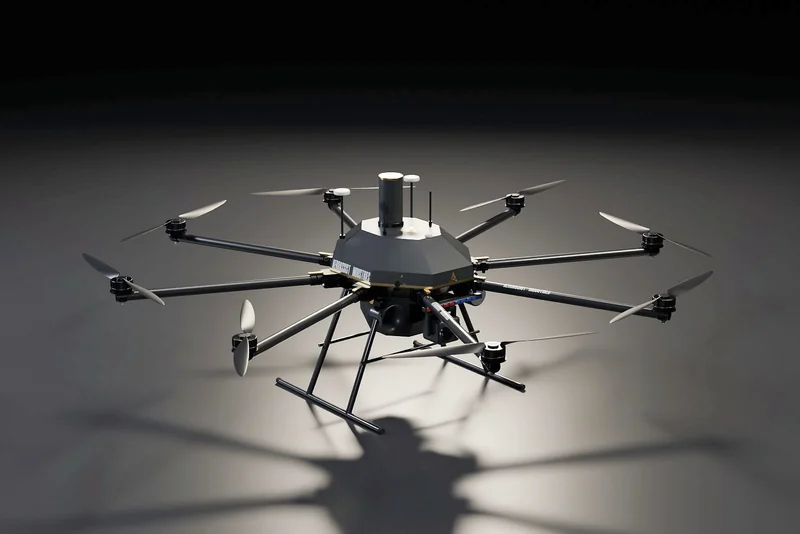 XR-3 · studio render
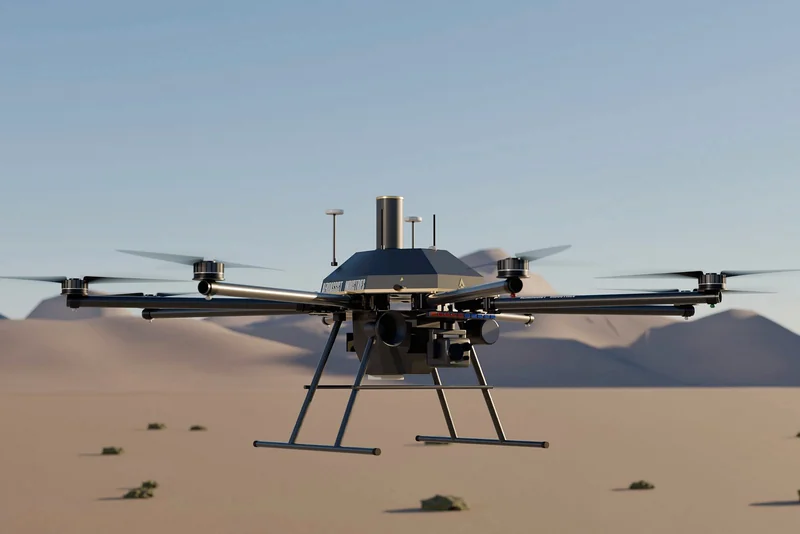 In flight · render
Built to stay. A 3.8 kW generator and a buffer pack drive eight motors on 32-inch props, so incident command keeps the picture over a perimeter, a search or a fire long after a battery aircraft would have gone home.
- CLASS
- Hybrid octocopter
- ENDURANCE
- ~1.5 h on fuel (est.)
- SIZE
- 3.1 m across the props
- BEST FOR
- Overwatch, SAR, wildfire
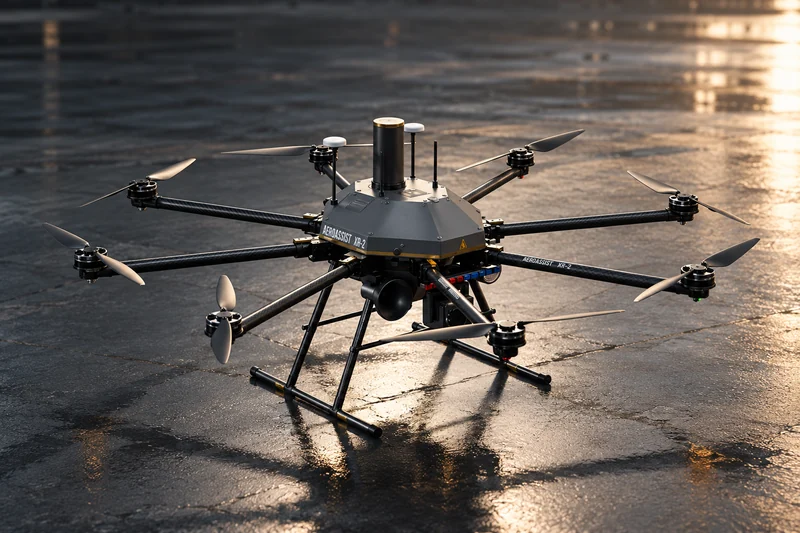 XR-2 · render
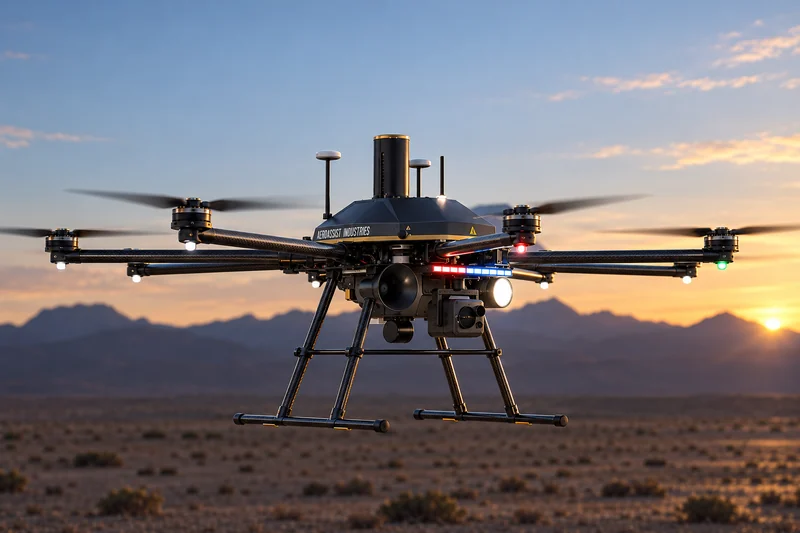 In flight at dusk · render
First on scene in town. Quiet and quick from a roof dock, with a 4K zoom and thermal camera, a searchlight, a loudspeaker and an optional winch for naloxone, an AED or a radio.
- CLASS
- Electric octocopter
- ENDURANCE
- ~39 min (est.)
- SIZE
- 2.6 m across the props
- BEST FOR
- Urban 911 calls
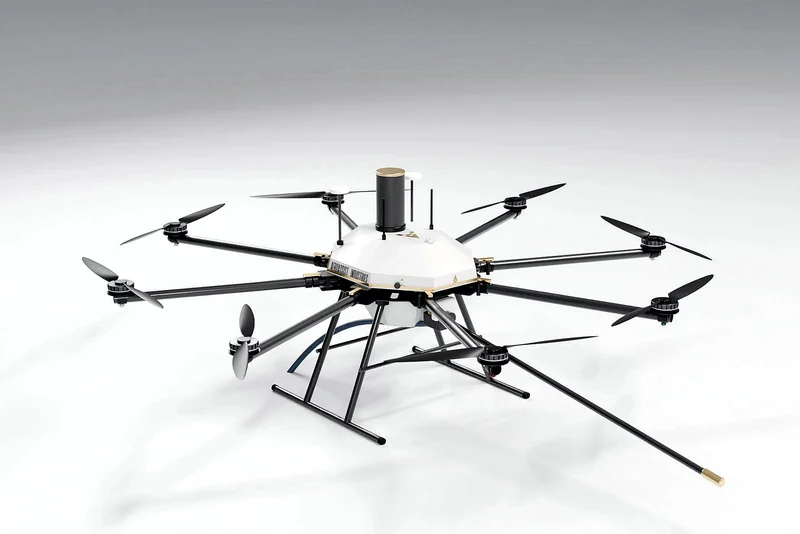 XR-1 · studio render
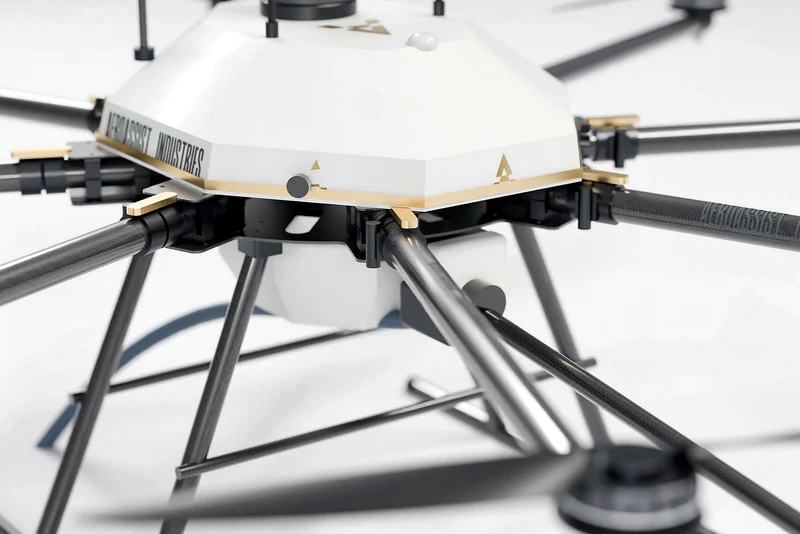 Close-up · render
Our building-washing aircraft on the XR-2 airframe. A 1.25 m carbon lance on a swivel head aims the spray, and radar holds a set distance from the wall while a ground pump feeds the hose.
- CLASS
- Utility octocopter
- FLIGHT TIME
- ~34 min with hose (est.)
- SIZE
- 2.6 m across the props
- BEST FOR
- Facades, windows, roofs
| XR-3 | XR-2 | XR-1 | |
|---|---|---|---|
| ROLE | Hybrid flagship | Electric responder | Utility |
| CLASS | Hybrid octocopter | Electric octocopter | Utility octocopter |
| ENDURANCE (EST.) | ~1.5 h on fuel | ~39 min | ~34 min with hose |
| DASH SPEED | 40+ mph (target) | 45+ mph (target) | Not a design driver |
| SIZE | 3.1 m across the props | 2.6 m | 2.6 m |
| BEST FOR | Overwatch, SAR, wildfire | Urban 911 calls | Building washing |
| PRICE | $100,000 · pre-order | $55,000 | $35,000 |
| NDAA §848 | Yes | Yes | Yes |
Pictures are renders of the current designs. Endurance figures are estimates from our design model and dash speeds are targets, all to be confirmed in flight testing. See full specs and pricing.
What goes into an XR octocopter, and why it matters on a call.
Click any point on the aircraft to see what it does and why it matters on a call.
Hybrid gas-electric powertrain (XR-3)
On the XR-3, a 3.8 kW generator powers the motors and charges a buffer pack in the air, so endurance is set by fuel rather than battery capacity. The XR-2 and XR-1 fly on two quick-release 12S packs instead.
Click any numbered point on the aircraft.
The aircraft is only half of it. The dock is what makes it automatic.
A DFR program lives or dies on what a launch costs in people and time. The dock removes the crew, the drive and the setup.
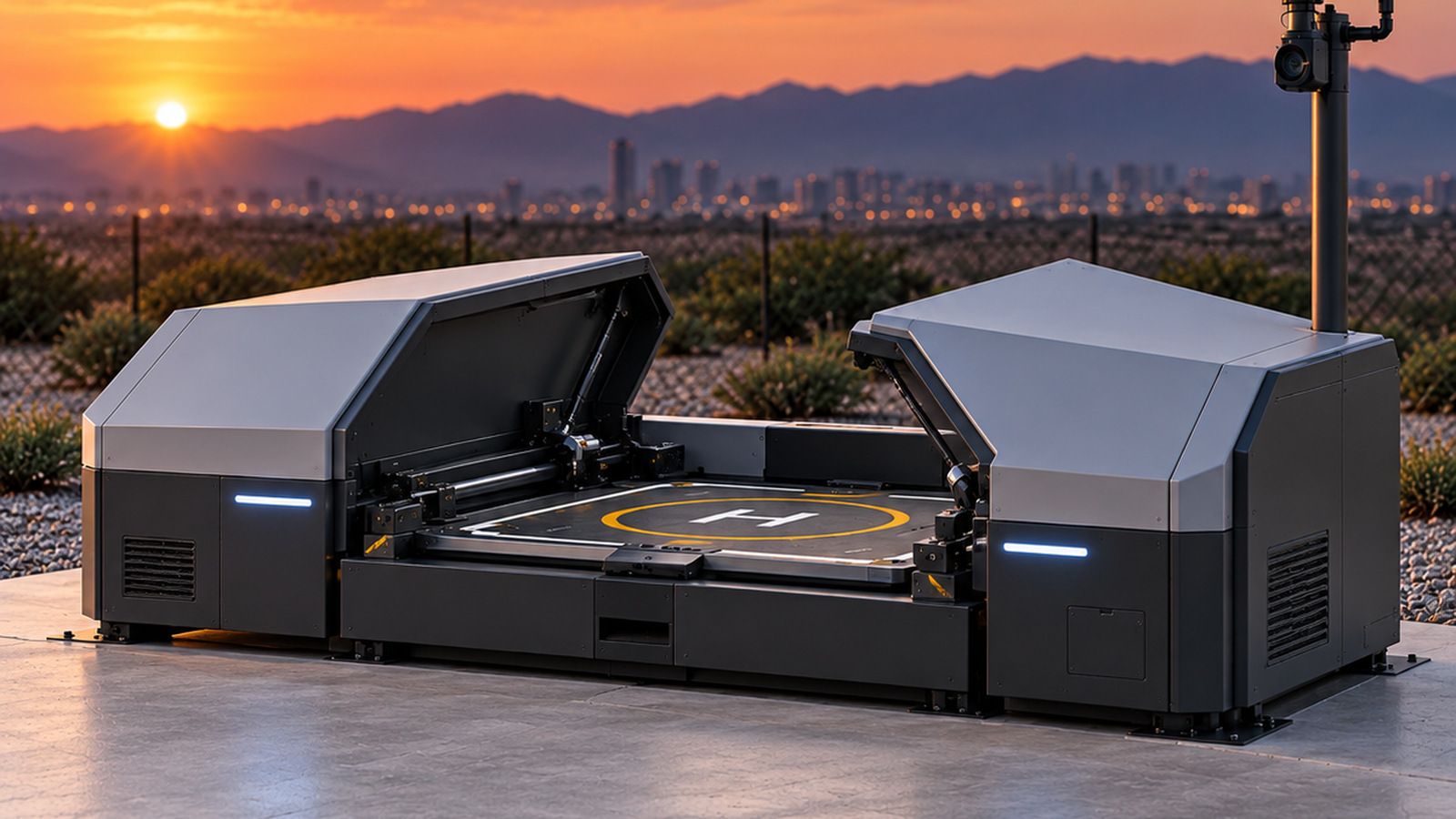
Self-contained pad
Weather-sealed enclosure with a heated, precision-centering pad. Sits on a roof, a tower or a trailer, and needs power and a network connection rather than a building.
Automatic refuel and charge
The aircraft re-docks and services itself between calls. No technician, no battery-swap cart, no aircraft sitting unavailable while someone finds a charger.
Health checks before launch
A preflight check runs on every task: propulsion, links, sensors, fuel and airspace. A failed check pushes the call to the next-nearest aircraft automatically.
Networked as one fleet
Docks coordinate. Dispatch tasks a call, not an aircraft, and the network picks whichever airframe gets there fastest with enough fuel or charge to stay.
What the aircraft carries, and when each one earns its weight.
EO — daylight camera
Stabilized optical zoom for reading plates, following a direction of travel, and giving command a plain view of the scene.
Every callIR — thermal imaging
Finds people through darkness, smoke and light cover, and shows a fire's heat behavior before crews commit to an interior approach.
Night, search, fireSpotlight
Lights a yard, a field or an alley from above so responders on the ground aren't working a scene by flashlight.
Night operationsLoudspeaker
Gives incident command a voice on scene before anyone is exposed — evacuation instructions, de-escalation or contact with a subject.
Standoff, evacuationStrobes and position lights
Required for night flight and useful on scene: the aircraft becomes a visible marker other units can navigate toward.
Required at nightPayload release
A common attachment point for carried payloads, so an aircraft already overhead can put something on the ground before a unit arrives. Configuration and approvals are agency-specific.
Mission dependentMapping and scene capture
Orthomosaic capture for collision reconstruction, fire scenes and post-incident documentation, tied to the evidence record.
InvestigationsSee it modeled on your own sector.
Tell us how your agency runs calls. We come back with a coverage sketch, a straight answer on cost and a realistic timeline.